
Our Location
304 North Cardinal St.
Dorchester Center, MA 02124

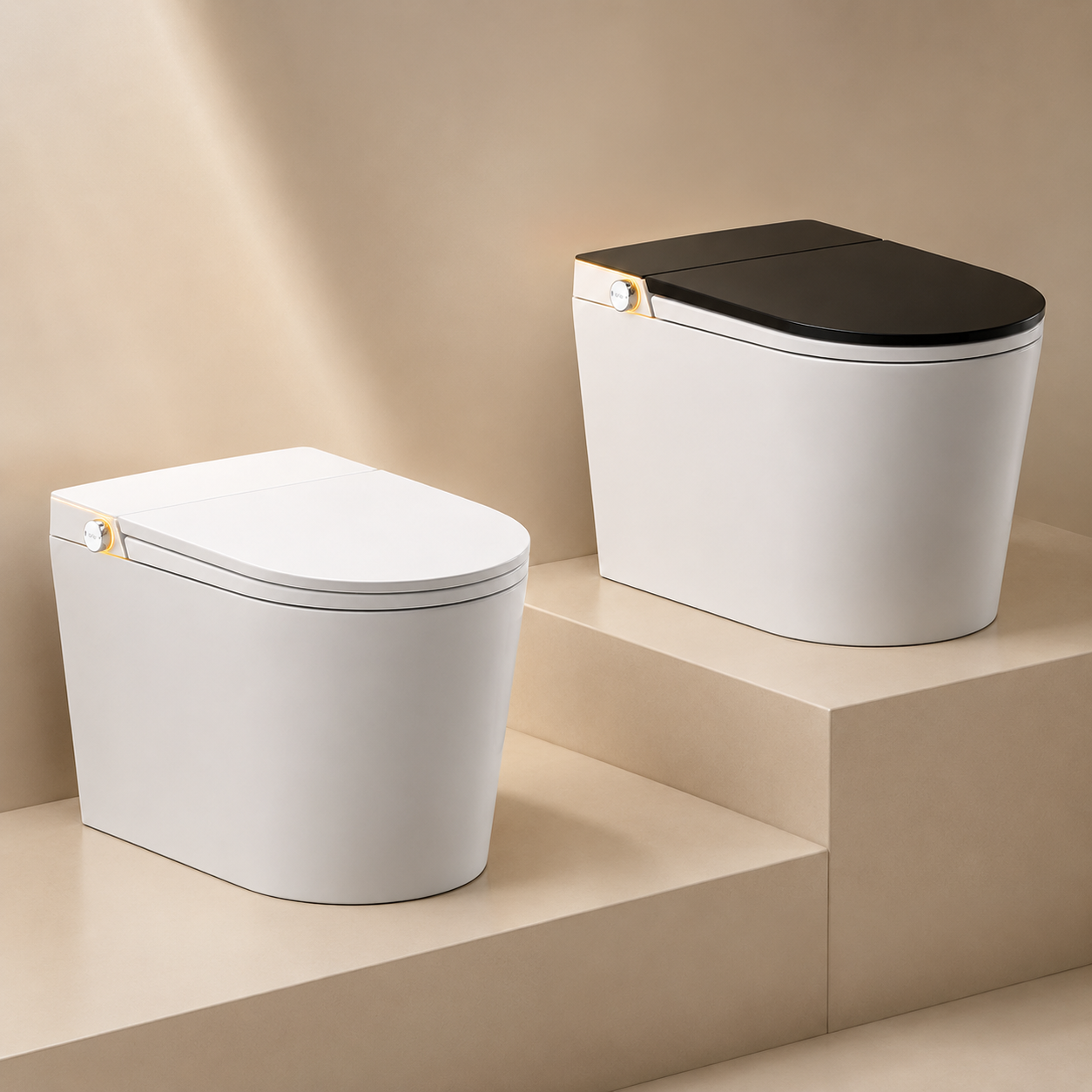
Smart toilets are becoming an essential part of modern bathroom upgrades. From warm water washing and heated seats to automatic flushing and deodorization, smart toilets are designed to make daily bathroom use cleaner, more comfortable, and more convenient.
However, when choosing a smart toilet, many buyers focus only on functions such as flushing power, heated seats, or UV sterilization. One important detail is often overlooked: the control method.
Most smart toilets offer one or more control options, such as a remote control, side knob control, app control, foot sensor control, or voice control. Each method has its own advantages. The best choice depends on the user’s habits, bathroom environment, and family needs.
In this article, we will compare remote control, knob control, and app control to help you choose the right smart toilet control option.
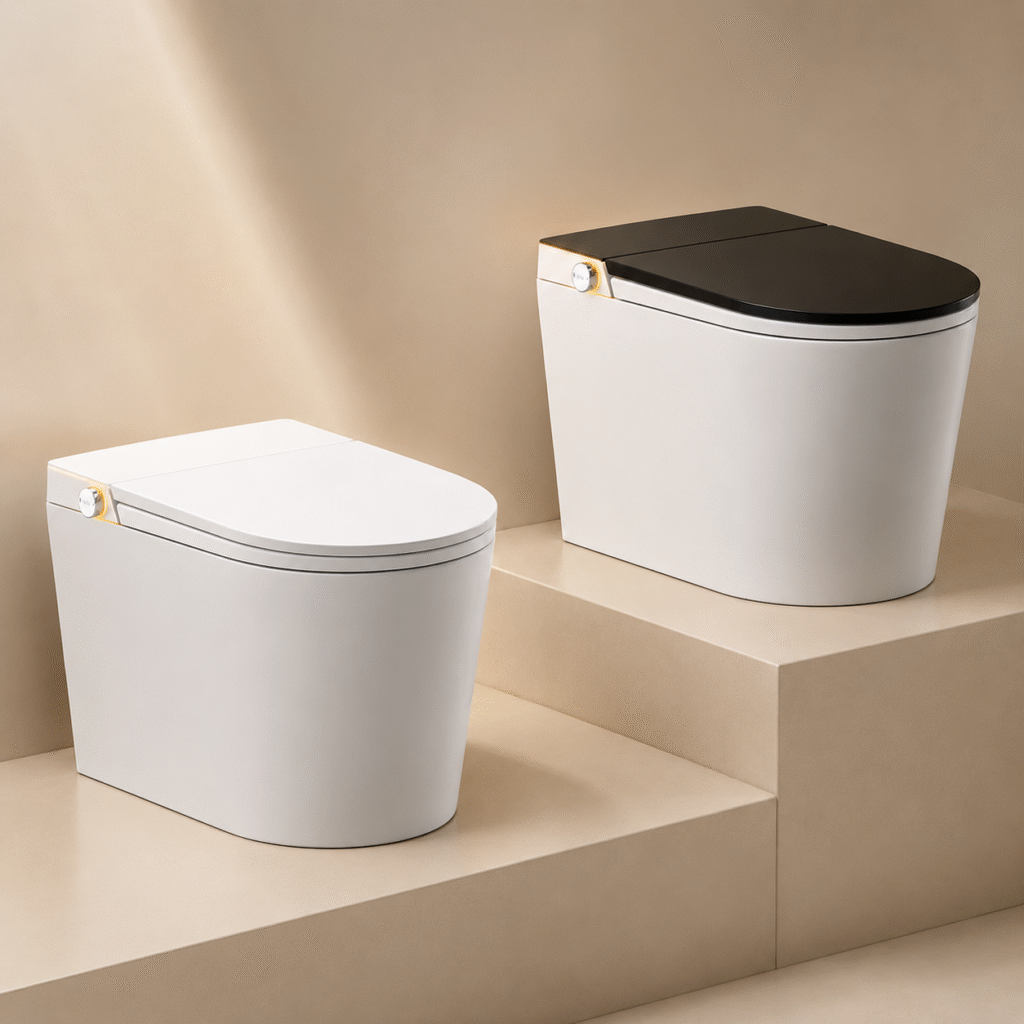
A smart toilet may have many advanced functions, but users need a simple and comfortable way to operate them. If the controls are too complicated, the product may feel difficult to use, especially for elderly users, children, or guests.
A good control system should be easy to understand, quick to respond, and convenient for daily use. It should allow users to adjust washing mode, water pressure, water temperature, seat temperature, drying temperature, flushing, deodorization, and other common functions without confusion.
That is why the control method is an important part of the overall smart toilet experience.
Remote control is one of the most common smart toilet control methods. It usually comes with clearly marked buttons for different functions, such as rear wash, feminine wash, flush, dry, stop, water temperature, seat temperature, and nozzle position.
The biggest advantage of remote control is convenience. Users can operate the toilet while seated without turning their body or reaching for side buttons. This is especially helpful for elderly users, pregnant women, and people who prefer easy operation.
A wall-mounted remote control can also keep the bathroom clean and organized. Many remotes use simple icons, making them easy to understand even for first-time users.
Remote control is easy to use, comfortable while seated, and suitable for most family members. It is especially practical for smart toilets with many functions because each button can be clearly assigned to a specific feature.
For family bathrooms, hotels, apartments, and high-end residential projects, a remote control can improve the user experience and make operation more intuitive.
Remote controls require batteries or charging, depending on the design. They may also be misplaced if they are not mounted on the wall. For commercial or rental spaces, it is better to choose a model with a fixed remote holder or secondary backup controls.
Knob control is another popular option for smart toilets. It is usually installed on the side of the toilet. Users can rotate or press the knob to control basic functions such as wash, dry, flush, or stop.
The main advantage of knob control is simplicity. It does not require users to understand many buttons. A single knob can handle the most frequently used functions, making the smart toilet easier to operate.
This control method is especially suitable for people who prefer a clean and minimalist design. It also works well as a backup control when the remote control is not nearby.
Knob control is simple, direct, and reliable. It is ideal for daily quick operation and does not depend on a separate remote device. Because it is built into the toilet body, it is always available.
For users who do not want complicated controls, a side knob provides a practical and user-friendly experience.
Although knob control is simple, it may not be as detailed as a remote control or app. If the smart toilet has many advanced functions, a knob may only control the most common ones. More detailed settings may still need a remote or app.
Also, some users may need to slightly turn their body to reach the side knob, which may not be ideal for elderly users or people with limited mobility.
App control is designed for users who want a more advanced smart bathroom experience. With a mobile app, users can adjust different settings from their phone, such as washing mode, water pressure, seat temperature, drying temperature, flushing, deodorization, night light, and user memory.
App control is especially useful for customization. Users can save personal preferences and quickly activate them later. This is convenient for families where different users prefer different temperature or pressure settings.
App control also gives the product a more modern smart-home feel. For younger users and smart home projects, it can be an attractive selling point.
App control offers more detailed settings, personalized preferences, and a modern user experience. It is useful for people who want more control over every function.
For premium smart toilets, app control can help show the product’s intelligent features more clearly and improve the overall value of the bathroom upgrade.
App control depends on a smartphone and sometimes a stable connection. It may not be the most convenient option for quick daily operation. Elderly users or guests may prefer physical buttons, a remote control, or knob control instead.
For this reason, app control is best when combined with another control method, such as remote control or knob control.
Each control method has different strengths.
Remote control is best for users who want clear, comfortable, and easy seated operation. It is suitable for most families and daily use.
Knob control is best for users who prefer simple, direct, and reliable operation. It is a good choice for quick use and backup control.
App control is best for users who want personalization, smart-home integration, and detailed function settings. It is more suitable for tech-friendly users and premium smart bathroom projects.
The best smart toilet often combines multiple control methods. For example, a smart toilet may include a side knob for quick operation, a remote control for everyday comfort, and app control for advanced settings.
For family use, remote control plus knob control is usually the most practical combination. The remote control allows easy operation while seated, while the side knob provides simple backup control.
If the family includes elderly users or children, clear physical controls are more important than complex app features. A remote with large icons and a simple knob can make daily use easier.
App control can still be useful for younger users or for saving personalized settings, but it should not be the only control option.
For hotels, apartments, rental properties, and commercial projects, simplicity and reliability matter most. Guests may not have time to learn complicated controls, so a clear remote control or side knob is usually better.
A wall-mounted remote can keep the bathroom organized and easy to use. A knob control can serve as a reliable backup. App control may be less necessary in hotel settings unless the project is designed as a premium smart room experience.
For premium smart bathrooms, a combination of remote control, knob control, app control, voice control, and foot sensor control can create a stronger high-end experience.
Users can choose the control method that feels most convenient in different situations. For example, voice control or foot sensor control can reduce hand contact, while app control allows personalized settings.
A multi-control smart toilet gives users more flexibility and makes the product feel more intelligent.
Besides remote, knob, and app control, many smart toilets also offer other control methods.
Foot sensor control allows users to flush or lift the seat with a simple foot gesture. This is useful for hands-free operation and improved hygiene.
Voice control allows users to activate functions without touching buttons. It is convenient in premium smart toilet models and can improve accessibility.
Automatic sensing can control lid opening, seat lifting, flushing, and closing. This makes the toilet more intelligent and reduces manual operation.
When choosing a smart toilet, these extra control options can further improve convenience.
Before buying a smart toilet, consider who will use it most often. If elderly users or children will use the toilet, choose simple and clear controls. If the product is for a premium home or smart bathroom project, choose a model with multiple control methods.
Also consider daily habits. Some users prefer physical buttons. Others prefer app-based customization. Many buyers find that the best experience comes from having both simple manual controls and advanced smart controls.
A good smart toilet should not force users to rely on only one control method. It should provide flexible operation for different situations.
Remote control, knob control, and app control all play important roles in the smart toilet experience.
Remote control is clear, comfortable, and suitable for most users. Knob control is simple, reliable, and always available. App control offers personalization and advanced smart settings.
For most homes, the best choice is a smart toilet that combines remote control and knob control. For premium bathrooms, app control, voice control, and foot sensor control can add even more convenience and value.
When choosing a smart toilet, do not only look at washing, flushing, or heating functions. The control method is also important because it directly affects daily comfort, convenience, and user satisfaction.
Remote control is very useful because it allows users to operate the toilet comfortably while seated. It is especially helpful for toilets with multiple functions.
Knob control is simpler and more reliable for quick operation, but remote control usually provides more detailed function buttons. The best choice depends on user preference.
Yes. App control is useful for personalized settings and advanced smart functions. However, it is best used together with physical controls such as a remote or knob.
A clear remote control with large icons and a simple side knob are usually best for elderly users. App control may be less convenient for users who are not familiar with smartphones.
Yes. Many smart toilets support multiple controls, including remote control, knob control, app control, foot sensor control, and voice control.
For hotels, remote control and knob control are usually the most practical because they are easy for guests to understand and use.
Some smart toilet apps may require Wi-Fi or Bluetooth connection, depending on the product design. Always check the product specifications before purchase.
For most users, the best combination is remote control plus knob control. For premium models, app control, voice control, and foot sensor control can provide a more advanced experience.
