Vår plats
304 North Cardinal St.
Dorchester Center, MA 02124

304 North Cardinal St.
Dorchester Center, MA 02124

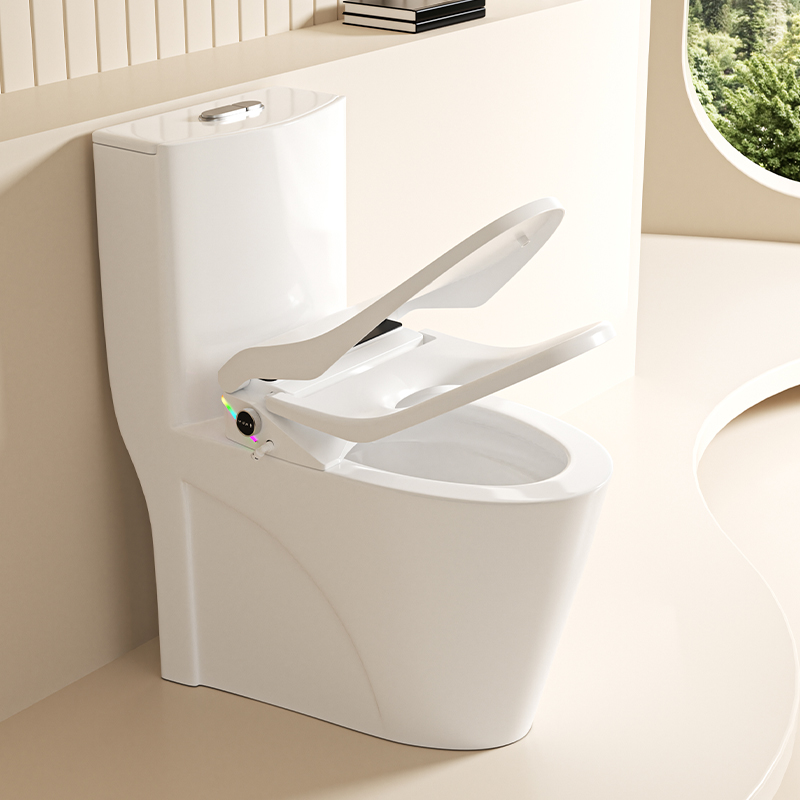
Smart toilets are becoming an important product category in the global bathroom industry. As more consumers look for comfort, hygiene, and intelligent bathroom solutions, importers, distributors, bathroom brands, and project contractors are paying more attention to smart toilet OEM and ODM manufacturing.
For many buyers, purchasing standard smart toilets is only the first step. To build a stronger brand and meet local market needs, custom manufacturing may be necessary. Buyers may need customized logos, packaging, plug types, voltage options, function combinations, remote control layouts, manuals, or even new product designs.
However, smart toilet customization is more complex than ordinary sanitary ware customization. A smart toilet includes ceramic structure, electronic control systems, water heating modules, sensors, flushing systems, nozzles, seat heating, drying systems, and safety protection components. Before starting an OEM or ODM project, buyers should understand the key details clearly.
This guide explains what buyers should know before custom manufacturing smart toilets.
OEM means Original Equipment Manufacturing. In a smart toilet OEM project, the buyer usually chooses an existing model from the supplier and customizes it with the buyer’s brand identity.
Common OEM customization options include:
Custom logo
Custom carton design
Custom user manual
Custom remote control sticker
Custom product label
Custom plug type
Custom voltage option
Custom language packaging
Market-specific function configuration
OEM is suitable for importers, wholesalers, bathroom brands, online sellers, and project contractors who want to sell smart toilets under their own brand without developing a completely new structure.
The main advantage of OEM is lower development cost and faster delivery. Since the product structure already exists, buyers can reduce design risk and enter the market more quickly.
ODM means Original Design Manufacturing. In a smart toilet ODM project, the supplier provides deeper product development support. The buyer may request a new appearance, special function combination, different ceramic shape, upgraded control system, or exclusive product design.
ODM is more suitable for brands that want product differentiation. Compared with OEM, ODM usually requires more communication, longer development time, higher minimum order quantity, and possible mold or tooling costs.
ODM customization may include:
New ceramic body design
Exclusive toilet lid shape
Special button or knob design
Customized function system
Different internal structure
Custom sensor solution
New remote control design
App or voice control development
Special market-oriented feature combination
For buyers who want to build a long-term smart toilet brand, ODM can create stronger market competitiveness.
The choice between OEM and ODM depends on the buyer’s business stage, budget, order quantity, and market strategy.
OEM is better for buyers who want faster market entry, lower development cost, and stable existing models. It is also suitable for first-time smart toilet importers who need to test the market before investing in full product development.
ODM is better for buyers who already understand their market and want a more unique product line. If the buyer has clear design requirements, a stable sales channel, and sufficient budget, ODM can help create stronger brand value.
For most new buyers, starting with OEM is usually safer. After confirming market demand, buyers can gradually move to ODM customization.
Before starting a smart toilet OEM or ODM project, buyers should clearly define the target market.
Different markets have different bathroom habits, water pressure conditions, electrical standards, installation requirements, and price expectations. For example, a hotel project may need premium functions and strong after-sales support. A residential market may focus on comfort, hygiene, and appearance. An apartment renovation market may need stable flushing and easy installation.
Buyers should consider:
Which country or region will the product be sold in?
Is the product for hotels, apartments, homes, or retail?
What price level is acceptable?
What functions are most important to local users?
Are there special certification or labeling requirements?
What voltage and plug type are needed?
Is low water pressure common in the target market?
Clear market positioning helps the supplier recommend the right model and customization solution.
Smart toilets can include many functions, but not every market needs every function. Buyers should choose functions based on the target customer and price level.
Common smart toilet functions include:
Bakrutorensare
Intimtvätt
Rörlig tvätt
Child wash
Uppvärmt säte
Torkning med varm luft
Warm water washing
Adjustable water temperature
Adjustable seat temperature
Justerbart vattentryck
Automatisk spolning
Foot sensor flushing
Automatic lid opening
Night light
Luktneutralisering
UV-sterilisering
Self-cleaning nozzle
Remote control
Side knob control
Voice control
Built-in water tank flushing
For entry-level markets, basic washing, heated seat, drying, and remote control may be enough. For mid-range markets, buyers may add deodorization, night light, foot sensor flushing, and self-cleaning nozzles. For high-end hotels and premium homes, automatic lid opening, UV sterilization, voice control, and built-in water tank flushing can improve product value.
The best customization strategy is not to add as many functions as possible, but to select the functions that match the user’s real needs.
Water pressure is a key issue in smart toilet manufacturing. If the target market includes high-rise apartments, old buildings, hotels, or areas with unstable water supply, buyers should pay close attention to flushing performance.
Some smart toilets depend on direct pipeline water pressure. If the pressure is too low, flushing may become weak. In this case, a built-in water tank smart toilet may be a better choice because it can reduce dependence on external water pressure and provide more stable flushing.
Before confirming a custom model, buyers should ask the supplier about:
Minimum water pressure requirement
Flushing method
Water consumption per flush
Built-in tank option
Anti-clogging performance
Flush testing standard
Suitability for high-rise buildings
Suitability for old building renovation
For project orders, stable flushing is more important than decorative smart functions. A smart toilet must first work reliably as a toilet.
Smart toilets are electrical sanitary products, so electrical requirements must be confirmed before production.
Different countries use different voltage, frequency, and plug standards. For example, some markets use 110V, while others use 220V to 240V. Plug types also vary by region.
Buyers should confirm:
Voltage
Frequency
Plug type
Power cord length
Grounding requirement
Waterproof protection
Electrical safety design
Local certification needs
If these details are not confirmed early, the product may not be suitable for the target market after arrival. For OEM/ODM orders, electrical customization should be discussed before sample production.
Logo customization is one of the most common OEM requirements. Buyers may want their logo printed on the toilet body, remote control, packaging, user manual, product label, or warranty card.
Before confirming logo placement, buyers should consider the product appearance. The logo should be visible but not too large. A clean and professional logo position can improve brand recognition without affecting the premium look of the smart toilet.
Common logo customization methods include:
Ceramic body logo
Seat cover logo
Remote control logo
Packaging logo
Manual logo
Product nameplate logo
Buyers should provide high-resolution logo files and confirm the logo color, size, and position with the supplier before production.
Packaging is very important for smart toilets because the product includes ceramic parts and electronic components. Strong packaging can reduce transport damage and protect the buyer’s brand image.
For OEM and ODM orders, buyers may request custom cartons, color boxes, instruction labels, barcodes, warning stickers, and pallet packaging.
Good packaging should consider:
Carton strength
Foam protection
Corner protection
Product fixing method
Moisture resistance
Drop test requirements
Pallet loading
Lastkapacitet för containrar
Retail display needs
E-commerce shipping needs
For international shipping, packaging should be strong enough to handle long-distance transport. For online sales, packaging protection is even more important because the product may go through multiple handling steps.
Smart toilets include many functions, so clear user manuals are necessary. For export markets, buyers may need manuals in English, Spanish, Arabic, French, German, or other local languages.
A good manual should include:
Product functions
Installation instructions
Remote control operation
Cleaning guidance
Safety warnings
Troubleshooting guide
Warranty terms
Maintenance instructions
For OEM orders, customized manuals can help reduce customer confusion and after-sales questions. Buyers should review the manual carefully before mass production to make sure the language and technical information are correct.
Different markets may require different certification documents or compliance standards. Since smart toilets involve water and electricity, certification can be important for import clearance, retail sales, and customer trust.
Buyers should check local requirements before ordering. Depending on the market, requirements may involve electrical safety, water efficiency, ceramic standards, packaging labels, or product documentation.
Before production, buyers should discuss:
Required certifications
Test reports
Product labels
Import documents
Electrical safety compliance
Water-saving requirements
Market-specific standards
Certification requirements should be confirmed before bulk order, not after production is completed.
For smart toilet OEM and ODM projects, sample confirmation is very important. Buyers should not place a large order based only on photos or product descriptions.
A sample helps buyers check appearance, flushing performance, washing functions, heating stability, remote control operation, packaging quality, and installation details.
During sample testing, buyers should check:
Produktens utseende
Ceramic quality
Flushing strength
Nozzle operation
Water temperature stability
Seat heating
Drying function
Sensorns respons
Remote control function
Ljudnivå
Packaging protection
Installation compatibility
For ODM projects, several rounds of sample improvement may be needed before mass production.
OEM and ODM projects usually have minimum order quantity requirements. The MOQ depends on the customization level.
Simple logo customization may require a lower MOQ. Custom packaging may require a higher MOQ because printing factories often have minimum production quantities. New mold development or exclusive product design usually requires a much higher MOQ.
Buyers should ask the supplier clearly about:
MOQ for standard models
MOQ for logo customization
MOQ for custom packaging
MOQ for function customization
MOQ for ODM development
Sample cost
Mold cost
Lead time
Understanding MOQ early helps buyers plan budget and inventory more effectively.
Smart toilet production involves ceramic manufacturing, electronic assembly, function testing, packaging, and final inspection. Custom orders may require additional time for logo printing, packaging production, manual preparation, and sample approval.
Buyers should confirm:
Sample lead time
Packaging design time
Bulk production time
Inspection time
Shipping preparation time
Peak season production schedule
For hotel projects, apartment projects, or retail launch plans, delivery time is very important. Buyers should communicate the expected shipment date clearly with the supplier before confirming the order.
Quality control is one of the most important parts of smart toilet manufacturing. A smart toilet must pass both sanitary ware inspection and electronic function testing.
Buyers should ask the supplier about:
Ceramic inspection
Leakage testing
Flushing testing
Water pressure testing
Nozzle testing
Heating function testing
Sensor testing
Remote control testing
Aging testing
Provning av elsäkerhet
Final inspection before packing
For bulk orders, each unit should be tested before shipment. A professional supplier should have a clear quality control process to reduce after-sales problems.
Smart toilets include many replaceable parts, such as nozzles, control boards, remote controls, sensors, valves, heating components, seat covers, and power modules. Buyers should confirm spare parts availability before ordering.
For importers and distributors, after-sales support is critical. If customers cannot get spare parts or technical support, the brand reputation may be affected.
Buyers should ask:
What is the warranty period?
Which parts are covered?
Can spare parts be supplied separately?
What spare parts should be prepared for bulk orders?
Does the supplier provide troubleshooting support?
Are installation videos available?
Can technical documents be provided?
A reliable OEM/ODM smart toilet supplier should support long-term cooperation, not only one-time sales.
For brand buyers, consistency is very important. The sample should match the final bulk production. The first order should also match future repeat orders.
Buyers should confirm the final approved model, function list, packaging design, logo position, manual version, spare parts list, and inspection standard before production.
For ODM projects, buyers may also need to confirm whether the design is exclusive, whether the supplier can sell the same design to other customers, and whether any tooling cost gives the buyer special rights.
Clear communication can prevent disputes and protect the buyer’s brand positioning.
A good supplier is not only a factory that produces toilets. For smart toilet OEM and ODM projects, the supplier should understand product development, quality control, export requirements, customization, packaging, and after-sales support.
Buyers should evaluate the supplier from several aspects:
Product range
OEM/ODM experience
Technical communication ability
Quality control process
Export packaging experience
Sample support
Customization options
Production capacity
Support för reservdelar
After-sales response
Choosing the right supplier can reduce risk and improve long-term business success.
Smart toilet OEM and ODM manufacturing can help buyers build a stronger brand, meet local market needs, and create more competitive bathroom products. However, custom manufacturing requires careful planning.
Before starting a project, buyers should define the target market, confirm function configuration, check water pressure requirements, verify electrical standards, customize branding and packaging, review certification needs, test samples, understand MOQ, confirm lead time, and evaluate after-sales support.
OEM is suitable for buyers who want to enter the market quickly with customized branding. ODM is suitable for buyers who want deeper product differentiation and exclusive product development.
By working with a professional smart toilet OEM/ODM supplier, importers, distributors, bathroom brands, and project contractors can reduce sourcing risks, improve product quality, and develop smart toilet products that match modern bathroom market demand.
