
Unser Standort
304 North Cardinal St.
Dorchester Center, MA 02124

Choosing the right smart toilet supplier is one of the most important decisions for importers, distributors, bathroom brands, hotel project contractors, and sanitary ware wholesalers. A smart toilet is not a simple ceramic product. It combines ceramic manufacturing, electronic control, water heating, seat heating, flushing systems, sensors, nozzles, drying modules, remote control systems, and safety protection components.
Because of this, buyers should not compare suppliers only by price. A very low price may look attractive at the beginning, but it can also bring hidden risks such as unstable quality, poor packaging, delayed delivery, weak after-sales support, and high customer complaint rates.
For smart toilet projects, supplier reliability directly affects product performance, customer satisfaction, brand reputation, and long-term business growth. This article explains how to compare smart toilet suppliers from four key aspects: quality control, testing, lead time, and warranty.
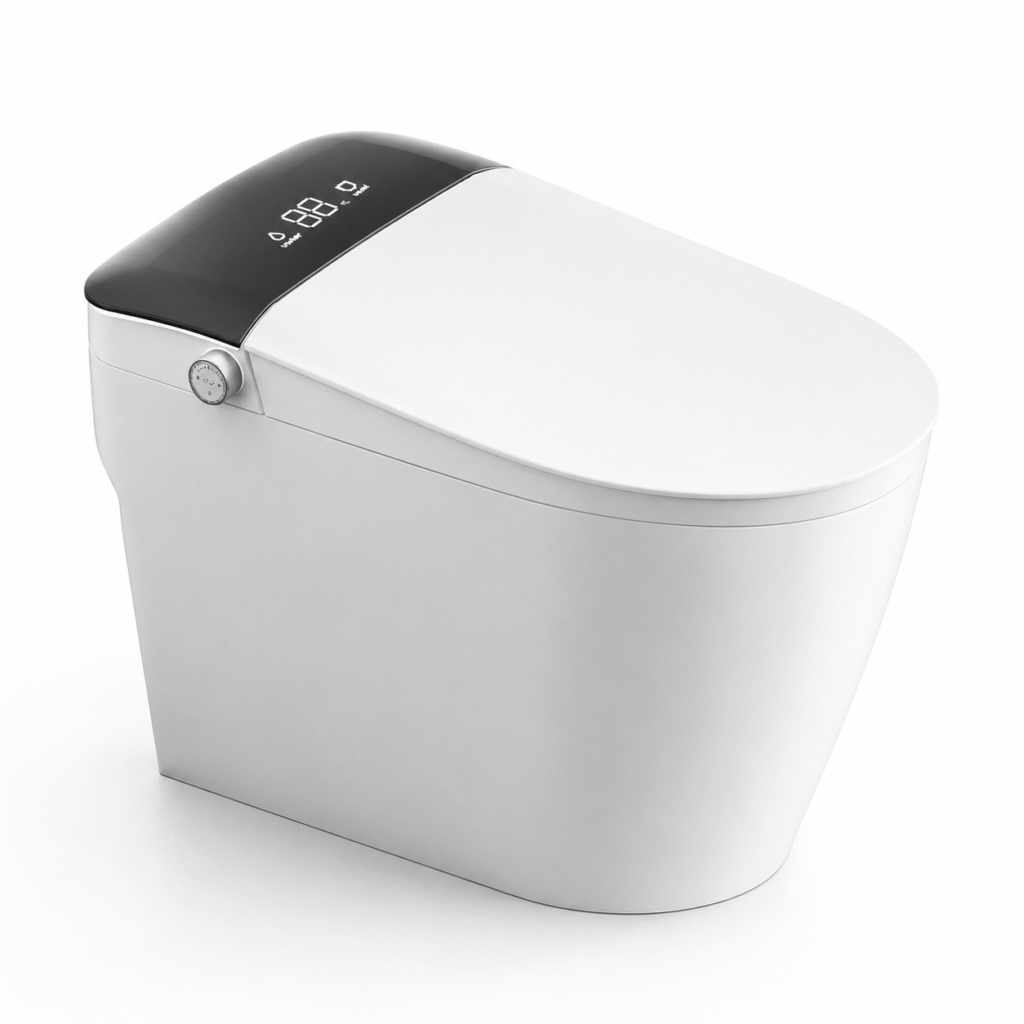
Smart toilets require higher technical control than traditional toilets. A traditional toilet mainly depends on ceramic quality and flushing structure. A smart toilet must also pass electronic function tests, water leakage tests, heating tests, sensor tests, aging tests, and safety inspections.
If the supplier does not have a stable quality control system, problems may appear after installation. Common issues may include weak flushing, water leakage, unstable heating, remote control failure, sensor malfunction, nozzle problems, ceramic defects, or damaged packaging during shipping.
For importers and distributors, these problems can increase after-sales cost. For hotel and apartment project buyers, they can affect the reputation of the project. For bathroom brands, they can damage customer trust.
Therefore, choosing a professional smart toilet supplier is not only about buying products. It is about building a reliable supply chain.
Before checking technical details, buyers should first compare the supplier’s product range. A professional smart toilet supplier should offer different models for different market needs.
For example, entry-level smart toilets may include basic washing, heated seat, warm air drying, and remote control. Mid-range models may include deodorization, night light, foot sensor flushing, and self-cleaning nozzles. High-end models may include automatic lid opening, UV sterilization, voice control, built-in water tank flushing, and advanced sensor systems.
A complete product range allows buyers to select suitable models for different markets, such as:
Residential bathroom upgrades
Hotel and hospitality projects
Apartment renovation
Seniorengerechte Badezimmer
Online retail sales
Bathroom showrooms
OEM and ODM brand projects
If a supplier only provides a limited number of models, buyers may have less flexibility when building a product line. A supplier with multiple smart toilet options can better support long-term market development.
The ceramic body is the foundation of a smart toilet. Even if the electronic functions are advanced, poor ceramic quality can reduce product value and create customer complaints.
Buyers should ask the supplier how they control ceramic quality. Important inspection points include:
Surface glaze smoothness
Ceramic color consistency
Bowl shape accuracy
Crack inspection
Pinholes and black spots
Deformation control
Water absorption rate
Flushing channel quality
Trapway design
Final appearance inspection
A high-quality ceramic surface should be smooth, clean, and easy to maintain. Good glaze quality can help reduce dirt buildup and improve bathroom hygiene.
For bulk orders, consistency is very important. The sample may look good, but mass production must also remain stable. Buyers should ask whether the supplier has a ceramic inspection process before electronic assembly and final packing.
Flushing performance is one of the most important parts of any toilet. A smart toilet may have many advanced functions, but if it cannot flush reliably, users will not be satisfied.
Buyers should compare suppliers based on how they test flushing performance. A reliable supplier should be able to explain the flushing system, water pressure requirement, water consumption, and anti-clogging performance.
Zu den wichtigen Fragen gehören:
What flushing system does the toilet use?
Is it siphon flushing, jet siphon flushing, or built-in tank flushing?
What is the minimum water pressure requirement?
Is the toilet suitable for low water pressure bathrooms?
Can the supplier provide flushing test videos?
Is every unit tested before shipment?
How does the supplier check anti-clogging performance?
For high-rise apartments, old building renovation, hotels, and markets with unstable water supply, built-in water tank smart toilets may be more suitable because they can reduce dependence on direct pipeline pressure.
A professional supplier should help buyers choose the right flushing system according to the target market.
Smart toilets include water circuits, nozzles, valves, tanks, connectors, flushing systems, and internal pipes. Leakage testing is essential before shipment.
Water leakage can cause serious after-sales problems. It may damage bathrooms, create customer complaints, and increase warranty costs. For hotels and apartments, leakage problems can be especially serious because they may affect multiple rooms or units.
Buyers should ask whether the supplier performs leakage testing on every smart toilet. Important areas include:
Water inlet connection
Internal water pipes
Nozzle system
Flushing system
Built-in tank structure
Valve connections
Ceramic sealing areas
Base connection
Packaging inspection after testing
A reliable smart toilet supplier should have a clear leakage testing process before final packing.
A smart toilet contains many electronic parts. These may include the control board, remote control receiver, seat heating system, water heating system, drying system, sensors, night light, deodorization module, UV sterilization system, and voice control system.
Before ordering, buyers should check how the supplier tests electronic functions.
Common function tests include:
Rear wash test
Feminine wash test
Moving wash test
Child wash test
Seat heating test
Water heating test
Warm air drying test
Remote control test
Side knob test
Foot sensor test
Automatic lid opening test
Automatic flushing test
Night light test
Deodorization test
UV sterilization test
Voice control test
For bulk orders, every function should be checked before shipment. A small electronic failure rate can become a large after-sales problem when the order quantity is high.
Aging testing is used to check whether electronic components and heating systems can operate reliably over time. Since smart toilets are used daily in wet bathroom environments, aging testing is very important.
During aging testing, the product or key components may be powered on and operated for a period of time to check stability. This can help identify early failures before shipment.
Buyers should ask:
Does the supplier perform aging testing?
Which components are tested?
How long is the aging test?
Is heating stability checked?
Are sensors and control boards tested?
Is the test applied to every unit or by sampling?
A supplier with aging testing is usually more reliable than one that only performs basic visual inspection.
Smart toilets are used in bathrooms, where water and electricity are both present. Therefore, electrical safety is extremely important.
Buyers should compare suppliers based on their safety design and testing process. Important points include:
Waterproof electrical structure
Grounding protection
Insulation protection
Overheat protection
Power leakage protection
Stable control board design
Safe heating module
Safe power cord and plug
Correct voltage and frequency
Clear safety labels
User manual warnings
For export orders, buyers should also confirm whether the smart toilet can meet the electrical requirements of the target market. Voltage, plug type, frequency, and certification requirements should be discussed before production.
Different countries and regions may require different certifications or compliance documents. Since smart toilets involve ceramic, water, and electricity, importers should confirm documentation early.
Depending on the target market, buyers may need documents related to electrical safety, water efficiency, ceramic standards, packaging labels, or import clearance.
A reliable supplier should be able to tell buyers what documents they can provide and which certifications are available for specific models.
Before placing a bulk order, buyers should ask:
What certifications are available?
Are test reports available?
Are the documents valid for the target market?
Can the product label meet local requirements?
Can the user manual be customized?
Can voltage and plug type be adjusted?
Can the supplier support export documentation?
Certification should not be discussed only after production. It should be confirmed before the order begins.
Smart toilets are fragile and valuable products. They include ceramic parts and electronic components, so packaging must be strong enough for international shipping.
Poor packaging can cause cracks, broken lids, damaged electronic parts, or hidden transportation damage. For importers and e-commerce sellers, packaging quality can directly affect customer satisfaction.
Buyers should compare packaging details such as:
Carton strength
Foam protection
Corner protection
Product fixing method
Moisture protection
Wooden pallet option
Drop test support
Carton size and weight
Container-Ladungsmenge
E-commerce shipping suitability
For large orders, buyers can ask for packaging photos, packaging drawings, or sample packaging confirmation.
A lower product price may not be useful if the packaging is weak and products arrive damaged.
Lead time depends strongly on production capacity. A supplier with limited production capacity may not be able to support urgent project orders or repeat orders.
Buyers should ask about the supplier’s monthly production capacity, peak season schedule, sample lead time, and bulk production time.
Zu den wichtigen Fragen gehören:
How many units can the supplier produce per month?
What is the normal lead time for standard models?
What is the lead time for OEM orders?
What is the lead time for ODM projects?
How long does packaging customization take?
Can the supplier support repeat orders?
Can the supplier handle urgent project orders?
For hotel projects, apartment projects, and retail launches, delivery timing can be critical. A delayed shipment may affect the buyer’s sales plan or project schedule.
Before bulk ordering, buyers should usually request samples. A sample allows buyers to check appearance, function, packaging, installation, and user experience.
Sample lead time may vary depending on the model and customization level. Standard models may be faster. Custom logo, special plug type, customized manual, or ODM development may require more time.
Buyers should confirm:
Sample availability
Sample cost
Sample production time
Shipping method
Whether the sample matches bulk production
Whether customization can be shown on the sample
How sample feedback will be handled
A professional supplier should support sample testing and communicate clearly about sample details.
Bulk order lead time includes several stages, not only production. Buyers should consider the full order process.
A typical smart toilet order may include:
Model confirmation
Sample approval
Logo confirmation
Verpackungsdesign
Material preparation
Ceramic production or stock confirmation
Electronic assembly
Function testing
Aging testing
Final inspection
Packaging
Warehouse preparation
Export loading
If the order includes OEM or ODM customization, the lead time may be longer.
Buyers should ask for a realistic production schedule instead of only a general promise. A good supplier should explain what affects lead time and help buyers plan ahead.
Supplier communication is often overlooked, but it is very important. Smart toilet orders involve many technical details, including water pressure, voltage, plug type, functions, packaging, manuals, labels, spare parts, warranty, and testing standards.
If the supplier responds slowly or unclearly, mistakes may happen during production.
Buyers should evaluate:
Response speed
Technical understanding
Ability to answer detailed questions
Clear quotation format
Clear product specifications
Professional sample support
Clear order confirmation
Ability to solve problems quickly
A supplier with good communication can reduce misunderstandings and make the order process smoother.
Warranty is a key factor when comparing smart toilet suppliers. Because smart toilets include both ceramic and electronic components, buyers should understand exactly what is covered.
Important warranty questions include:
What is the warranty period?
Does the warranty cover electronic parts?
Does it cover ceramic defects?
Does it cover seat heating parts?
Does it cover control boards?
Does it cover remote controls?
Does it cover sensors?
Does it cover nozzles and valves?
How are warranty claims handled?
Are spare parts provided?
Who pays for shipping costs?
A clear warranty policy helps buyers reduce risk and explain after-sales terms to their own customers.
Spare parts support is essential for smart toilet business. Even with good quality control, some components may need replacement after long-term use.
Important spare parts may include:
Fernbedienungen
Steuerplatinen
Düsen
Valves
Sensoren
Seat covers
Heating modules
Power cords
Drying modules
Deodorization parts
UV sterilization components
Flushing parts
Importers and distributors should ask whether the supplier can provide spare parts separately. For bulk orders, buyers may also request a small percentage of spare parts with the shipment.
Good spare parts support can reduce after-sales pressure and improve customer satisfaction.
Warranty is not only about replacing parts. Technical support is also important. Buyers may need help with installation questions, troubleshooting, function operation, and after-sales diagnosis.
A good smart toilet supplier should provide:
Installation manual
User manual
Troubleshooting guide
Function videos
Installation videos
Wiring or technical diagrams
Remote support
Spare parts guidance
After-sales response process
For overseas buyers, clear technical documents can save a lot of time. They also help distributors train local installers and sales teams.
Many buyers need more than standard products. They may need logo customization, packaging design, language manuals, plug type customization, voltage options, function configuration, or exclusive product design.
A supplier with OEM and ODM capability can support brand development and market differentiation.
Buyers should compare:
OEM logo options
Custom packaging support
Manual language customization
Remote control label customization
Plug and voltage customization
Function configuration flexibility
ODM design ability
MOQ for customization
Mold or tooling cost
Customization lead time
For long-term brand buyers, OEM and ODM support can be a major advantage.
Price comparison is necessary, but buyers should compare the full value, not only the unit price.
A smart toilet price may be affected by:
Ceramic quality
Flushing system
Built-in tank design
Function configuration
Heating system
Sensor quality
Control board quality
Packaging strength
Testing process
Garantieservice
Certification documents
Customization requirements
A lower price may mean fewer functions, weaker materials, less testing, or limited after-sales support. Buyers should always compare specifications side by side.
The best supplier is not always the cheapest supplier. It is the supplier that provides stable quality, suitable functions, reliable delivery, and long-term support at a reasonable price.
A professional supplier should provide detailed product specifications. Buyers should avoid making decisions based only on photos.
Important specifications include:
Product dimensions
Rough-in distance
Drainage type
Water pressure requirement
Voltage and frequency
Power rating
Plug type
Water consumption
Flushing method
Heating type
Seat temperature range
Water temperature range
Control method
Function list
Packaging size
Net weight and gross weight
Loading quantity
Warranty terms
Clear specifications help buyers compare suppliers more accurately and avoid misunderstandings after ordering.
For smart toilets, long-term cooperation is usually better than one-time purchasing. A stable supplier can help buyers develop new models, improve packaging, update functions, solve after-sales problems, and support repeat orders.
When comparing suppliers, buyers should think about long-term value. A professional supplier should be able to grow with the buyer’s business.
Long-term cooperation may include:
Stable product quality
Repeat order support
New model recommendations
OEM and ODM development
Market feedback improvement
Spare parts supply
After-sales support
Better communication
Flexible order planning
A reliable smart toilet supplier can become an important partner in the buyer’s bathroom product business.
Comparing smart toilet suppliers requires more than checking product photos and prices. Buyers should carefully evaluate quality control, testing procedures, lead time, warranty, packaging, spare parts support, communication efficiency, and OEM/ODM capability.
A professional smart toilet supplier should provide stable ceramic quality, reliable flushing performance, complete function testing, leakage testing, aging testing, electrical safety protection, strong packaging, clear lead time, and practical after-sales support.
For importers, distributors, bathroom brands, hotel project buyers, and contractors, choosing the right supplier can reduce sourcing risks, improve customer satisfaction, and protect long-term brand reputation.
Before placing an order, buyers should request detailed specifications, confirm testing standards, check sample quality, understand warranty terms, and evaluate the supplier’s ability to support future cooperation.
A good smart toilet supplier does not only deliver products. It helps buyers build a reliable, competitive, and sustainable smart bathroom product line.
